29日、日本はとても暑くなりました2。気温が高くなって、多くの人が水をたくさん飲みました3。学校や会社でも、エアコンを使いました4。
これから台風6号が日本に近づきます5。台風は強い風と雨を持ってきます6。海や川の近くは、とても危ないです7。
気象庁は「気をつけてください」と言いました8。みなさん、天気のニュースをよく見てください9。外に出る時は、注意してください10。
(あつい)
hot
(ひ)
day
(つづく)
to continue
(たいふう)
typhoon
(ごう)
number, issue (suffix)
(きをつける)
to be careful
(にほん)
Japan
(とても)
very; extremely
(きおん)
temperature (air)
(たかい)
expensive; high
(おおい)
many
(ひと)
person / people
(みず)
water
(たくさん)
a lot / many
(のむ)
to drink
(がっこう)
school
(かいしゃ)
company
(えあこん)
air conditioner
(つかう)
to use
(これから)
from now on
(ちかづく)
to approach
(つよい)
strong
(かぜ)
wind
(あめ)
rain
(もつ)
to have; to hold
(かわ)
river
(うみ)
sea, ocean
(ちかく)
nearby
(あぶない)
dangerous
(きしょうちょう)
Japan Meteorological Agency
(てんき)
weather
(にゅーす)
news
(よく)
often, well, frequently
(みる)
to see, watch
(みなさん)
everyone
(そと)
outside
(でる)
to come out; to occur
(ちゅうい)
caution, warning
~ continues
Expresses ongoing continuation of a state or event.
雨が続いている。
The rain continues.
地震が続いています。
Earthquakes continue.
to be careful of, to watch out for
An idiomatic expression meaning to pay attention to or be cautious about something. に marks the thing to be careful about.
車に気をつけてください。
Please watch out for cars.
体に気をつけてね。
Take care of yourself.
to become (い-adjective)
Expresses a change of state for い-adjectives. Drop the final い and add くなる. Indicates something has changed or will change to a new state.
寒くなりました。
It has gotten cold.
日本語が上手になりました。
My Japanese has gotten better.
値段が高くなりました。
The price became expensive.
please do ...
Polite request form. Formed with て-form + ください. Used to ask someone to perform an action.
ここに名前を書いてください。
Please write your name here.
もう一度言ってください。
Please say it once more.
窓を開けてください。
Please open the window.
to say that ...
Quotation pattern. と marks the quoted content, followed by 言う (to say). Used for both direct and indirect speech.
先生は明日休みだと言いました。
The teacher said tomorrow is a day off.
母は早く帰ってきてと言った。
My mother said to come home early.
彼はもう行かないと言っています。
He says he won't go anymore.
when ~
Indicates the time when something happened — when he was in junior high school.
中学生のとき病気になりました。
When I was a junior-high student I got sick.
子どものとき日本にいました。
I was in Japan when I was a child.
暑い日が続く 台風6号に気をつけて
Hot days continue: Watch out for Typhoon No. 6
29日、日本はとても暑くなりました。
On the 29th, Japan became very hot.
気温が高くなって、多くの人が水をたくさん飲みました。
The temperature rose, and many people drank a lot of water.
学校や会社でも、エアコンを使いました。
Air conditioning was used at schools and offices too.
これから台風6号が日本に近づきます。
Typhoon No. 6 is going to approach Japan from now on.
台風は強い風と雨を持ってきます。
The typhoon brings strong winds and rain.
海や川の近くは、とても危ないです。
Areas near the sea and rivers are very dangerous.
気象庁は「気をつけてください」と言いました。
The Japan Meteorological Agency said, "Please be careful."
みなさん、天気のニュースをよく見てください。
Everyone, please watch the weather news closely.
外に出る時は、注意してください。
When you go outside, please take care.
2026年05月29日 21:10
著者: jpreader
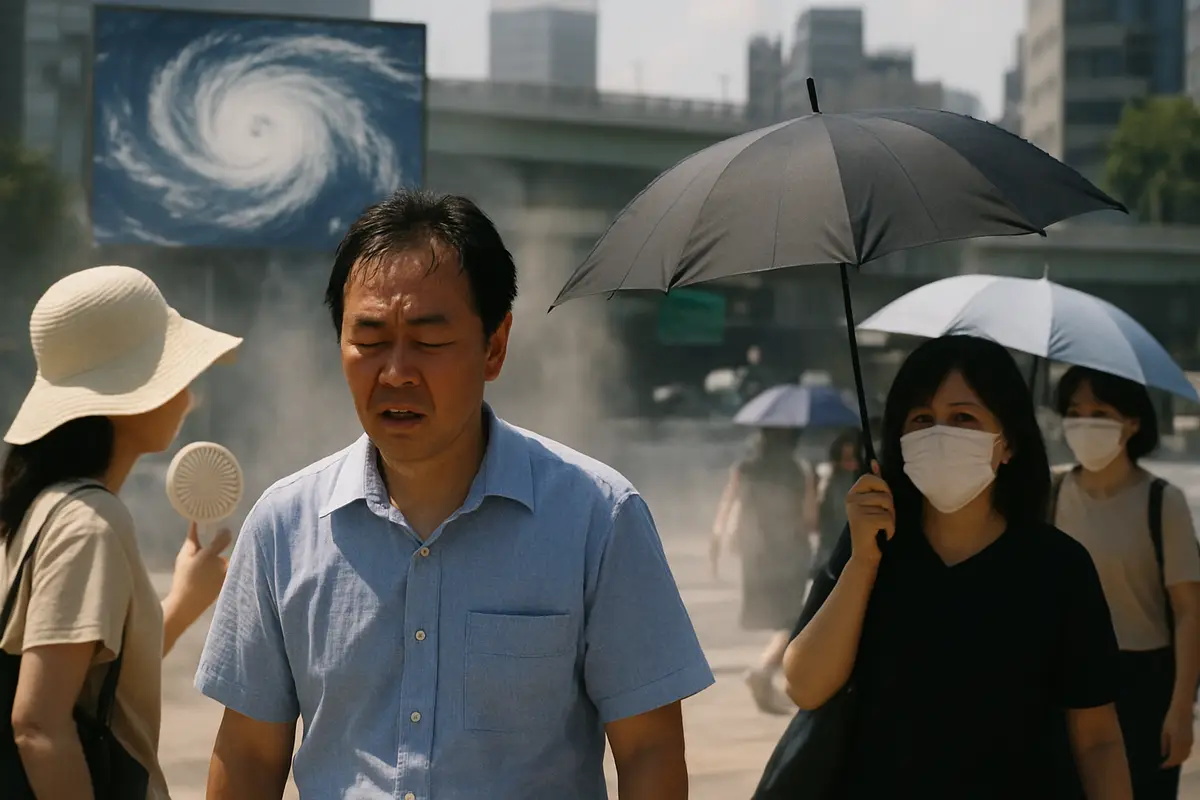
この画像はAIで生成され、学習目的で使用されています。
This image is AI-generated and used for educational purposes.
29日、日本はとても暑くなりました2。気温が高くなって、多くの人が水をたくさん飲みました3。学校や会社でも、エアコンを使いました4。
これから台風6号が日本に近づきます5。台風は強い風と雨を持ってきます6。海や川の近くは、とても危ないです7。
気象庁は「気をつけてください」と言いました8。みなさん、天気のニュースをよく見てください9。外に出る時は、注意してください10。
Discussion
to rate or comment.
No comments yet.