7月から富士山に登ることができます2。今年も登山のシーズンが始まります3。たくさんの人が富士山に登ります4。
今年から新しいルールがあります5。富士山に登る人は、お金をはらわなければなりません6。一人4000円です7。去年より高くなりました8。
朝早くから昼までしか、山に入ることができません9。夜は門が閉まります10。これは、人が多すぎて危ないからです11。市は、安全に登ってほしいと言っています12。
(ふじさん)
Mt. Fuji
(とざん)
mountain climbing
(しーずん)
season
(はじまる)
to begin
(がつ)
month (counter)
(のぼる)
to climb
(ことし)
this year
(たくさん)
a lot / many
(ひと)
person / people
(あたらしい)
new
(るーる)
rule
(おかね)
money
(はらう)
to pay
(ひとり)
one person / alone
(えん)
yen (currency); circle
(きょねん)
last year
(たかい)
expensive; high
(あさ)
morning
(はやい)
early / fast
(ひる)
noon / daytime
(やま)
mountain
(はいる)
to enter, be contained in
(よる)
night
(もん)
gate
(しまる)
to close
(おおい)
many
(あぶない)
dangerous
(し)
city
(あんぜん)
safety
(いう)
to say
can do ..., to be able to ...
Verb dictionary form + ことができる expresses ability or possibility. More formal than the potential verb form. Common in written Japanese and announcements.
日本語を話すことができます。
I can speak Japanese.
ここで写真を撮ることができます。
You can take photos here.
インターネットで予約することができます。
You can make a reservation on the internet.
must ~
Expresses strong obligation. Here the imperative to eliminate nuclear weapons.
核兵器をなくさなければなりません。
We must eliminate nuclear weapons.
行かなければなりません。
I must go.
only ~ (negative emphasis)
Means 'only' with a negative verb, emphasizing how few/little. ヒットを3本しか打つことができませんでした means 'could only hit 3 hits'.
ヒットを3本しか打つことができませんでした
could only get 3 hits
100円しかありません
I only have 100 yen
too much / excessively ~
Indicates excess. Used to describe the government's methods being too harsh (厳しすぎる) and the military deployment being excessive (やりすぎ).
政府の厳しすぎるやり方に反対する人たち
People opposing the government's overly harsh methods
軍を出すのはやりすぎだ。
Deploying the military is going too far.
because / since
Gives a reason. Here it explains the gate closes because it is dangerous due to too many people (危ないからです).
寒いから、窓を閉めます。
Because it's cold, I'll close the window.
時間がないから、急ぎましょう。
Since there's no time, let's hurry.
want (someone) to do ...
Expresses a wish for someone else to do something. Formed with て-form + ほしい. The person you want to act is marked with に.
静かにしてほしい。
I want you to be quiet.
もう少し待ってほしいです。
I'd like you to wait a bit more.
先生に説明してほしいです。
I want the teacher to explain.
is doing, has been doing (ongoing state/action)
Expresses a continuing action or resulting state. Formed with て-form + いる. Can describe an action in progress or a state resulting from a past change.
今、ご飯を食べています。
I am eating rice now.
東京に住んでいます。
I live in Tokyo.
ドアが開いています。
The door is open.
富士山の登山シーズンが始まる
Mount Fuji's climbing season begins
7月から富士山に登ることができます。
From July, you can climb Mount Fuji.
今年も登山のシーズンが始まります。
The climbing season begins again this year.
たくさんの人が富士山に登ります。
Many people climb Mount Fuji.
今年から新しいルールがあります。
There is a new rule starting this year.
富士山に登る人は、お金をはらわなければなりません。
People who climb Mount Fuji must pay money.
一人4000円です。
It is 4,000 yen per person.
去年より高くなりました。
It has become more expensive than last year.
朝早くから昼までしか、山に入ることができません。
You can only enter the mountain from early morning until noon.
夜は門が閉まります。
At night the gate is closed.
これは、人が多すぎて危ないからです。
This is because there are too many people and it is dangerous.
市は、安全に登ってほしいと言っています。
The city says it wants people to climb safely.
2026年05月30日 21:06
著者: jpreader
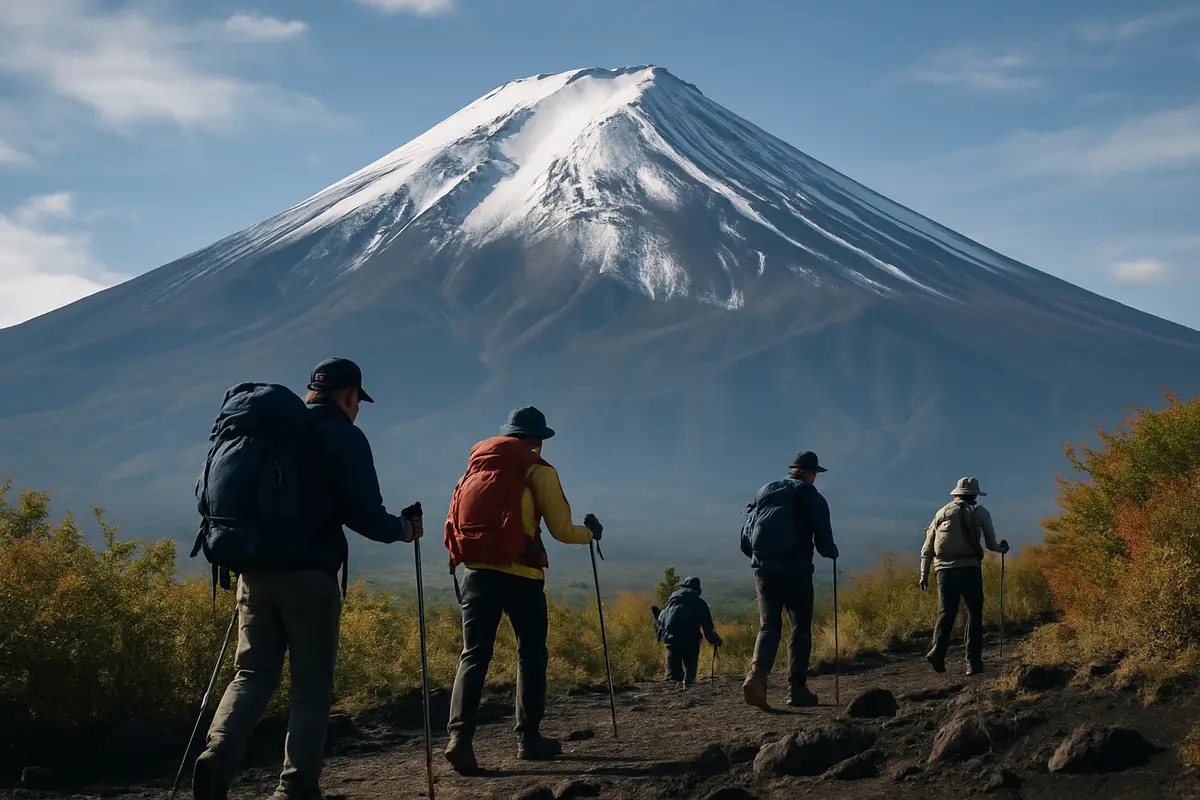
この画像はAIで生成され、学習目的で使用されています。
This image is AI-generated and used for educational purposes.
7月から富士山に登ることができます2。今年も登山のシーズンが始まります3。たくさんの人が富士山に登ります4。
今年から新しいルールがあります5。富士山に登る人は、お金をはらわなければなりません6。一人4000円です7。去年より高くなりました8。
朝早くから昼までしか、山に入ることができません9。夜は門が閉まります10。これは、人が多すぎて危ないからです11。市は、安全に登ってほしいと言っています12。
Discussion
to rate or comment.
No comments yet.