今年、日本に来た外国人の数が過去最多になりました2。多くの人が東京や京都などの有名な町を訪れています3。
コロナの問題で、数年前は外国人がとても少なくなりました4。しかし、最近は飛行機もたくさん飛ぶようになり、観光客が戻ってきました5。円が安いので、買い物を楽しむ人も多いです6。
観光客が増えて、お店やホテルは喜んでいます7。でも、町が込みすぎるという問題もあります8。政府は、地方にも観光客が行くように考えています9。
(がいこくじん)
foreigner
(かんこうきゃく)
tourist; sightseer
(かこ)
the past
(さいた)
the most; highest number
(ことし)
this year
(にほん)
Japan
(くる)
to come
(かず)
number, count
(おおい)
many
(ひと)
person / people
(とうきょう)
Tokyo
(きょうと)
Kyoto
(など)
et cetera, and so on
(ゆうめい)
famous
(まち)
town
(おとずれる)
to visit
(ころな)
coronavirus / COVID
(もんだい)
problem
(すうねん)
several years
(まえ)
before, previous
(とても)
very; extremely
(すくない)
few, scarce
(しかし)
however, but
(さいきん)
recently
(ひこうき)
airplane
(たくさん)
a lot / many
(とぶ)
to fly
(もどる)
to return / to come back
(えん)
yen (currency); circle
(やすい)
cheap / inexpensive
(かいもの)
shopping
(たのしむ)
to enjoy
(ふえる)
to increase; to grow
(みせ)
shop, store
(ほてる)
hotel
(よろこぶ)
to be delighted
(こむ)
to be crowded
(せいふ)
government; administration
(ちほう)
region; area
(いく)
to go
(かんがえる)
to think; to consider
to become
Expresses a change of state; Kawai became the new commissioner of the Sports Agency.
新しい長官になりました。
He became the new commissioner.
目が見えなくなりました。
He became unable to see.
is doing, has been doing (ongoing state/action)
Expresses a continuing action or resulting state. Formed with て-form + いる. Can describe an action in progress or a state resulting from a past change.
今、ご飯を食べています。
I am eating rice now.
東京に住んでいます。
I live in Tokyo.
ドアが開いています。
The door is open.
come to / reach the point where
Indicates a change in state or ability.
運転できるようになった。
Trains became able to run.
日本語が話せるようになりました。
I became able to speak Japanese.
because ~ / since ~
Causal connector. Because JA is buying at higher prices, store prices will also rise.
雨が降ったので、家にいた。
Since it rained, I stayed home.
忙しいので、行けません。
Since I'm busy, I can't go.
too much / excessively ~
Indicates excess. Used to describe the government's methods being too harsh (厳しすぎる) and the military deployment being excessive (やりすぎ).
政府の厳しすぎるやり方に反対する人たち
People opposing the government's overly harsh methods
軍を出すのはやりすぎだ。
Deploying the military is going too far.
called/named ~
Used to introduce or name something. In this article, 「鳥貴族」という店 means 'a store called Torikizoku'.
田中という人を知っていますか。
Do you know a person called Tanaka?
これは寿司という料理です。
This is a dish called sushi.
so that / in order to
Expresses a purpose or goal. Here the government is thinking so that tourists also go to rural areas (地方にも観光客が行くように考えています).
聞こえるように大きい声で話す。
Speak loudly so that it can be heard.
忘れないようにメモする。
I take notes so I won't forget.
外国人観光客が過去最多になった
Foreign tourists reach a record high
今年、日本に来た外国人の数が過去最多になりました。
This year, the number of foreigners who came to Japan reached a record high.
多くの人が東京や京都などの有名な町を訪れています。
Many people are visiting famous cities such as Tokyo and Kyoto.
コロナの問題で、数年前は外国人がとても少なくなりました。
Because of the COVID problem, the number of foreigners became very small a few years ago.
しかし、最近は飛行機もたくさん飛ぶようになり、観光客が戻ってきました。
However, recently many planes have started flying again, and the tourists have come back.
円が安いので、買い物を楽しむ人も多いです。
Because the yen is weak, many people also enjoy shopping.
観光客が増えて、お店やホテルは喜んでいます。
With more tourists, shops and hotels are pleased.
でも、町が込みすぎるという問題もあります。
But there is also the problem that the cities get too crowded.
政府は、地方にも観光客が行くように考えています。
The government is thinking of ways to get tourists to go to rural areas as well.
2026年05月30日 21:08
著者: jpreader
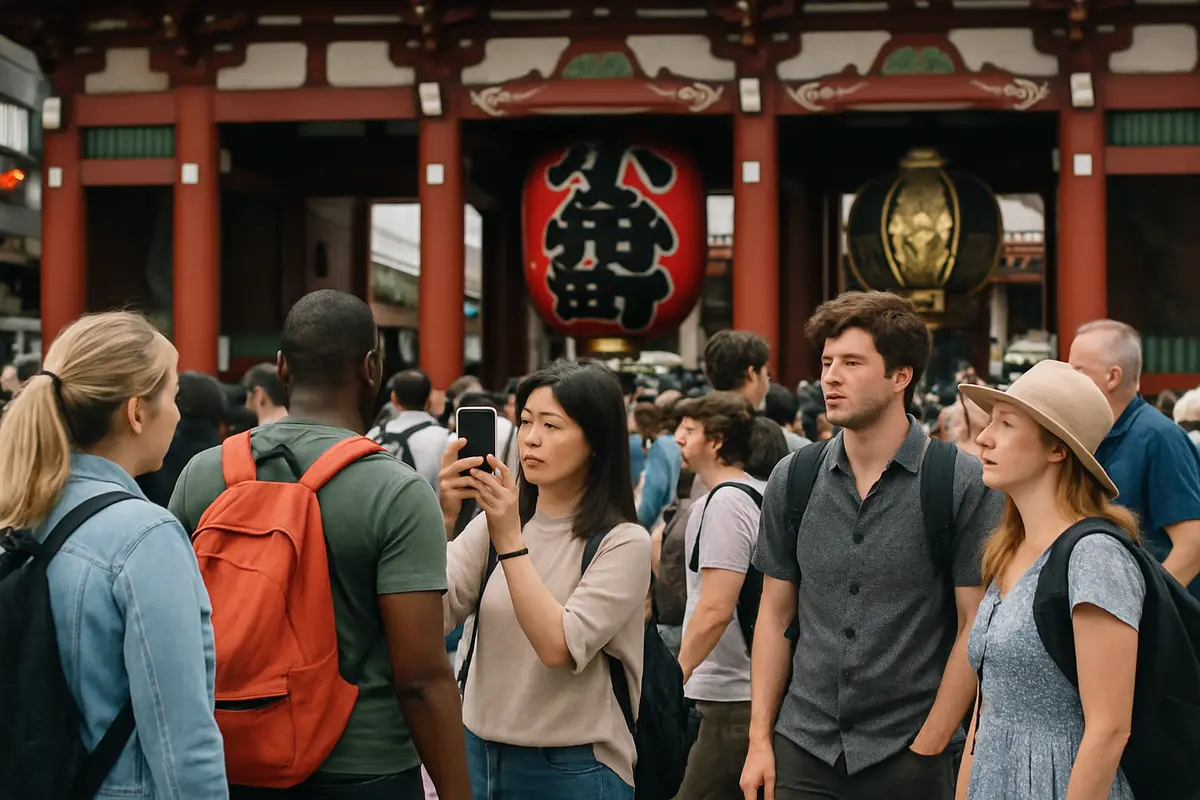
この画像はAIで生成され、学習目的で使用されています。
This image is AI-generated and used for educational purposes.
今年、日本に来た外国人の数が過去最多になりました2。多くの人が東京や京都などの有名な町を訪れています3。
コロナの問題で、数年前は外国人がとても少なくなりました4。しかし、最近は飛行機もたくさん飛ぶようになり、観光客が戻ってきました5。円が安いので、買い物を楽しむ人も多いです6。
観光客が増えて、お店やホテルは喜んでいます7。でも、町が込みすぎるという問題もあります8。政府は、地方にも観光客が行くように考えています9。
Discussion
to rate or comment.
No comments yet.